
Dog Allergies: Causes, Symptoms, and Treatment Options

Allergies are one of the most common reasons dogs visit the veterinarian. Just like people, dogs can develop allergies to things in their environment, ingredients in their food, or even fleas. Allergies can affect dogs of any breed or age, but certain breeds do appear to be more genetically predisposed to allergic skin disease.
Breeds commonly affected by allergies include:
- Labrador Retrievers
- Golden Retrievers
- French Bulldogs
- Boxers
- Beagles and other hounds
- Pit Bull-type dogs
- Cocker Spaniels
- Bulldogs
- Terriers
- German Shepherds
- Shih Tzus and other small breed dogs
Dogs with allergies often experience chronic itching, skin irritation, ear infections, and discomfort. The good news is that while allergies can be frustrating, there are many ways to help manage symptoms and improve your dog’s quality of life.
What Types of Allergies Do Dogs Get?

Environmental Allergies (Atopy)
Environmental allergies are among the most common allergies in dogs. Dogs may react to substances such as:
- Pollen
- Grass or weeds
- Dust mites
- Mold
Some dogs have seasonal symptoms, while others experience year-round allergies.
Flea Allergy Dermatitis
Some dogs are extremely sensitive to flea bites. Even a single flea bite can trigger intense itching and skin inflammation in allergic dogs.
Food Allergies
Food allergies often affect the skin and ears rather than causing digestive upset alone. Food allergies are less common than environmental allergies but can still occur. Dogs can be allergic to any protein source in their diets.
Contact Allergies
Occasionally, dogs can react to direct contact with substances such as certain shampoos, cleaning products, fabrics, or plants.
Common Symptoms of Allergies in Dogs
Dogs with allergies may show a variety of symptoms, including:
- Excessive itching or scratching
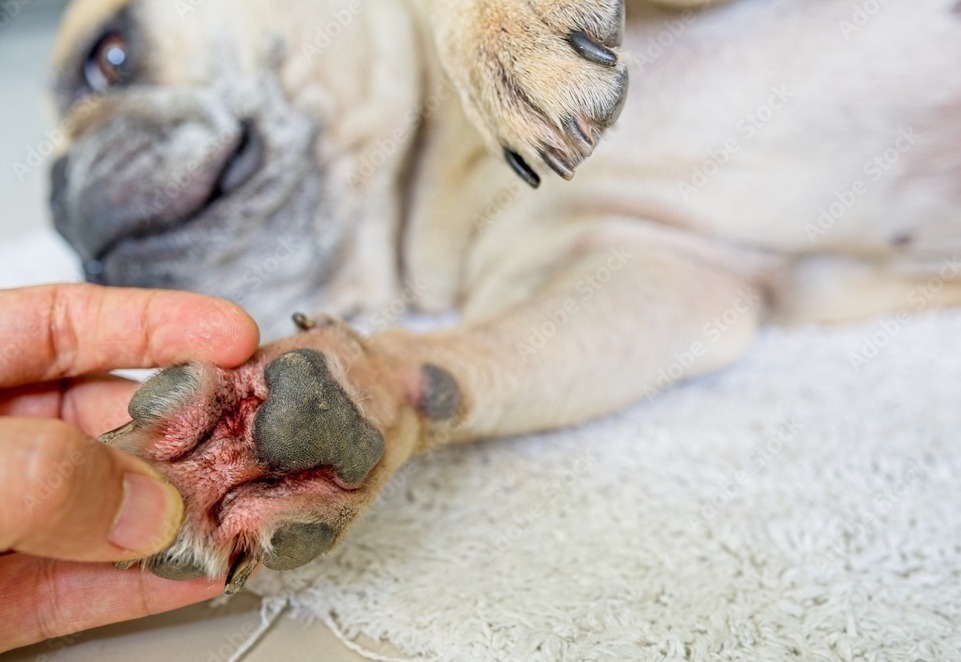
- Licking or chewing at the paws
- Red, irritated, or inflamed skin
- Recurrent ear infections
- Hair loss or thinning hair
- Skin infections or hot spots
- Scooting or licking around the rear end
- Watery eyes or sneezing (less common)
Many allergic dogs experience chronic skin and ear problems that tend to flare up repeatedly over time.
How Are Allergies Diagnosed?
Diagnosing allergies in dogs often takes time because many other conditions can cause similar symptoms. Your veterinarian may recommend:
- A physical exam and skin evaluation
- Testing for fleas or skin parasites
- Cytology to check for bacterial or yeast infections
- Food elimination trials
- Dermatologists can perform allergy testing for environmental allergies
Because allergies are often lifelong conditions, the goal is usually long-term management rather than a permanent cure.
How Are Dog Allergies Treated?
Treatment depends on the type and severity of your dog’s allergies. Many dogs benefit from a combination of therapies tailored to their individual needs.
Common Allergy Treatments Include:
- Prescription anti-itch medications
- Allergy injections or oral immunotherapy
- Medicated shampoos or wipes
- Ear medications for chronic ear infections
- Strict flea prevention
- Special prescription or limited-ingredient diets
- Supplements to help support skin health
- Treatment for secondary bacterial or yeast infections
Some dogs need seasonal treatment, while others require year-round allergy management.

Living With Allergies
Allergies can be frustrating for both dogs and their owners, especially because symptoms often come and go over time. However, with proper diagnosis and a personalized treatment plan, many allergic dogs can live very comfortable, happy lives.
At Tucker Road Animal Hospital, we work closely with pet owners to identify the underlying cause of their dog’s symptoms and develop realistic treatment plans that fit both the pet and the family. If your dog is frequently itching, licking, or developing recurrent ear or skin problems, our team is here to help.